Is It Perimenopause
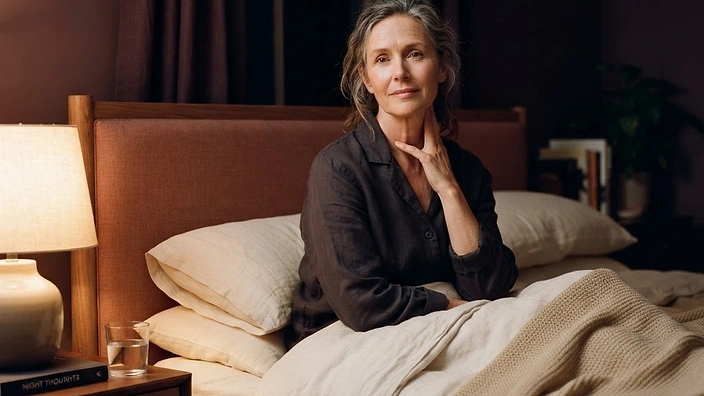
Your period shows up a week early, then takes six weeks to come back. You're wide awake at 3 a.m., hot enough to kick off the covers and cold enough to pull them back on. If your cycle and your internal thermostat have both changed, it's a reasonable question.
In this article
- 1. Look at what's changed for you
- 2. Can a blood test tell you?
- 3. When to get checked
- 4. References
Affiliate disclosure: As an Amazon Associate we earn from qualifying purchases. This article may contain affiliate links, which means we may earn a small commission if you buy through them, at no additional cost to you.
Is It Perimenopause? When Your Body Changes and Answers Are Hard to Find
Your period shows up a week early, then disappears for six weeks. You're wide awake at 3 a.m., kicking off the covers because you're roasting, only to pull them back on five minutes later. You're exhausted, forgetful, and wondering when your body became so unpredictable.
Welcome to the possibility of perimenopause. And if you're struggling to figure out what's happening, you're certainly not alone.
So, What Exactly Is Perimenopause?
Perimenopause is the transition leading up to menopause, often beginning in your 40s, although it can start earlier. During this time, estrogen levels fluctuate, ovulation becomes less predictable, and your once-reliable menstrual cycle may develop a mind of its own.
Hot flashes, night sweats, disrupted sleep, mood changes, brain fog, and vaginal dryness are among the common symptoms. Some women experience relatively mild changes, while others find their symptoms interfere significantly with everyday life.
And this isn't necessarily a brief transition. Research published in JAMA Internal Medicine found that women experiencing frequent hot flashes or night sweats reported a median duration of 7.4 years.
Why Getting Answers Can Be So Frustrating
Here's something that deserves more attention: Not every healthcare provider is adequately trained to recognize and manage perimenopause.
A 2025 study examining menopause care among healthcare providers found that 62% of surveyed clinicians identified insufficient training as a barrier to providing care. More recent research published in 2026 continues to highlight gaps in menopause education, particularly the lack of standardized training.
For women seeking answers, those gaps can mean appointments where symptoms are attributed to stress, aging, or anxiety without further discussion. Some women leave feeling dismissed, unheard, or even gaslit.
That doesn't mean every symptom is hormonal, and there are certainly knowledgeable, compassionate providers doing excellent work. But women shouldn't have to fight to have legitimate health concerns taken seriously.
Do You Need Hormone Testing?
Not necessarily. For otherwise healthy women 45 and older, perimenopause can often be identified through symptoms and menstrual changes rather than blood tests.
Hormone levels fluctuate considerably during this transition, making a single test an unreliable way to confirm or rule it out.
Testing may be appropriate for younger women or when other conditions, such as thyroid disorders, could explain the symptoms.
Unusually heavy bleeding, bleeding between periods, or any bleeding after 12 consecutive months without a period should always be evaluated.
Be Your Own Best Advocate
If something feels different, pay attention. Keep track of your symptoms, menstrual changes, sleep patterns, and how you're feeling overall.
Come to appointments prepared with questions. Ask about treatment options, including hormonal and nonhormonal approaches. And if you feel your concerns aren't being addressed, seeking a second opinion or a provider with specialized menopause training is entirely reasonable.
You deserve more than being told it's just part of getting older.
The Good News? Things Are Beginning to Change
Women's midlife health is finally receiving more of the attention it deserves.
Federal agencies, including the Agency for Healthcare Research and Quality, are actively encouraging research aimed at improving the diagnosis and treatment of menopause symptoms. Professional organizations such as The Menopause Society are also expanding educational opportunities for healthcare providers.
These efforts don't guarantee immediate improvements in access to care, but they represent meaningful progress toward better understanding and treatment of women's health concerns.
And perhaps most importantly, women are talking more openly about their experiences, asking better questions, and refusing to accept unnecessary suffering as an inevitable part of aging.
Perimenopause may be a natural transition, but that doesn't mean you have to navigate it without answers, support, or options.
This article is intended for general educational purposes and does not constitute medical advice.
References & Further Reading
- American College of Obstetricians and Gynecologists: The Menopause Years
- NICE: Menopause Identification and Management
- The Menopause Society: Family Physicians Lack Formal, Consistent Menopause Care Training (2026)
- Perceptions of Menopause Care: A Pilot Survey Study of Providers (2025)
- U.S. Office on Women's Health: Menopause Research Funding Opportunities
- Avis et al.: Duration of Menopausal Vasomotor Symptoms, JAMA Internal Medicine
This article is for general information only and does not provide medical advice.

Read next · Perimenopause & Menopause
Histamine and Perimenopause: Why Is My Body Suddenly Reacting to Everything?
More from this topic

Histamine and Perimenopause: Why Is My Body Suddenly Reacting to Everything?
The wine that never bothered you. The foods you've eaten for years. The random itching, flushing, or headaches. Could your changing hormones have something to do with it?

Airport Comfort After 50: Cute, Cozy, and Not Trying Too Hard
Living with lipedema means long hours of sitting, standing, and walking through airports can leave my legs heavy and miserable. So when I travel, comfort isn’t a preference — it’s a necessity.

12 Thoughtful Gifts for the Woman in Perimenopause: Because She Deserves a Little Extra Comfort
Comfort, cooling, and a little well-deserved pampering: twelve gifts that make the perimenopause years feel a whole lot kinder.
