I Asked About Lipedema. Months Later, I Finally Had an Answer. Part 1 of Living With Lipedema: The Things Nobody Told Us
Lipedema is often overlooked or mistaken for weight gain. One woman's journey to diagnosis begins an eight-part series on symptoms, awareness, and treatment.
In this article
- 1. When You Know Something Isn't Right
- 2. Months Later, I Finally Had Answers
- 3. What Exactly Is Lipedema?
- 4. Why Haven't More Women Heard About It?
- 5. How Common Is Lipedema?
- 6. Why This Matters During Midlife
- 7. What I Wish I Had Known Before That Appointment
- 8. This Is Just the Beginning
- 9. References and Further Reading
In January 2026, I went to see my healthcare provider with a question I’d been sitting with for a while. Could I have lipedema?
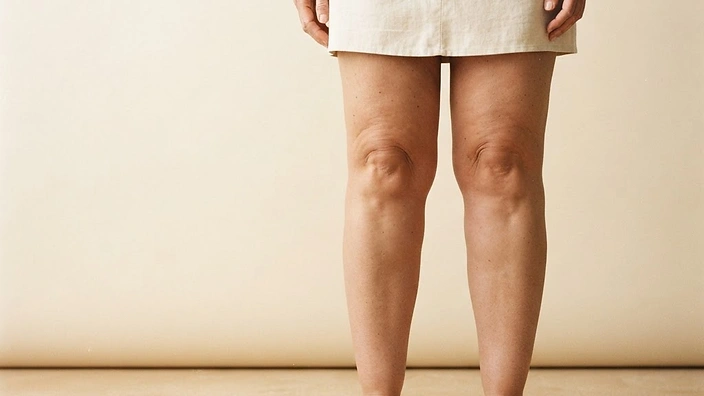
My legs felt heavy and painful, and they seemed disproportionately large compared with the rest of my body. The size was what I could see. The heaviness and pain were what made me bring it up. I’d been reading about lipedema, and for the first time, I recognized several of the things I’d been feeling in the same description.
My provider took a quick look at my legs. She seemed a little puzzled by the question, shook her head, and told me they looked fine. That was about as far as the conversation went.
Later, I opened my visit notes and read that I’d been reassured I didn’t have lymphedema. I read that word again. The question I’d brought to the appointment was about lipedema.
The names are easy to mix up. They refer to two different conditions, and months later I would learn that I had both. What the Specialist Found I eventually saw a specialist familiar with lipedema. After an evaluation, I learned that I had lipedema, lymphedema, and chronic venous insufficiency. Three different conditions could be contributing to the pain and heaviness I’d been feeling in the same two legs.
I was relieved to have an explanation. I was also frustrated. I kept thinking back to that appointment in January, when I’d finally asked the question out loud and gone home without an answer to it. What Is Lipedema? Lipedema is a chronic condition that affects how fatty tissue is distributed, most often in the legs and sometimes in the arms. It occurs predominantly in women. A common pattern is enlargement of both legs with the feet relatively unaffected. The tissue can feel painful or tender, and some women experience heaviness and easy bruising. How it looks and feels varies from person to person. Cleveland Clinic
Lipedema and obesity are distinct conditions, and they can occur together. Weight management can support overall health, but a change on the scale tells you only so much about the pain, tenderness, or disproportion that brought you in for an evaluation. U.S. Standard of Care for Lipedema
The three commonly described stages of lipedema reflect differences in appearance. How much pain or discomfort someone feels can vary within each stage. See the Lipedema Foundation’s visual guide Why Can It Be Hard to Get a Diagnosis? Lipedema has been described in medical literature for decades, yet it can still be confused with obesity, lymphedema, or other causes of leg enlargement. Clinicians diagnose it by considering your symptoms, medical history, and physical exam together. Blood tests or imaging may help investigate other possible causes. A diagnosis depends on the overall clinical picture. Cleveland Clinic
That’s the part I keep coming back to when I think about my first appointment. What my legs looked like during a quick exam was only one piece of what I was trying to describe. I also wanted to talk about how they felt and what had changed. How Common Is Lipedema? If you’ve looked up lipedema, you may have seen the estimate that it affects about 11% of women. That figure gets repeated often enough to sound settled. The Lipedema World Alliance’s consensus paper says the actual prevalence among adult women remains unknown. Without large, representative population studies, it’s hard to know how well earlier estimates reflect the wider population. Lipedema World Alliance consensus paper Why I’m Paying Attention in Midlife One of my first questions after the diagnosis was whether hormonal changes could be making my symptoms more noticeable. Clinical guidance describes lipedema appearing or becoming more apparent around times of hormonal change, including puberty, pregnancy, and menopause. Researchers are still working out what role hormones play. U.S. Standard of Care for Lipedema
Midlife already gave me plenty to sort through. With three diagnoses affecting my legs, I wanted to understand which symptoms might go with each condition and where perimenopause might fit into the picture. Those questions deserve their own articles. What I Wish I’d Said at That First Appointment If I could go back, I’d still ask the same question. I’d also spend more time describing what prompted it. Both legs felt heavy. They hurt. Their size seemed out of proportion to the rest of my body. Those were the changes I wanted help understanding.
I also wish I’d known how much it could help to see someone familiar with lipedema and with other vascular and lymphatic conditions. In my case, it took that second evaluation to understand how three conditions could be affecting my legs at the same time. Why I’m Writing This Series Getting a diagnosis answered the question I’d been asking since January. Then came the questions I hadn’t known to ask. How could I have all three conditions? Could perimenopause be part of what I was feeling? What might actually help?
I started reading because I wanted to make sense of my own legs. I’m writing this series because I remember how hard it was to piece everything together. Over the next few articles, I’ll share what I’ve learned, where the research is still uncertain, and what I wish someone had explained to me sooner.
Coming next in the series Lipedema, Lymphedema, and Venous Insufficiency: What’s the Difference?
I’m sharing my personal experience and what I’ve learned from published research. This article is for informational purposes and is not medical advice.
This article is for general information only and does not provide medical advice.
Affiliate disclosure: Some articles on this site contain affiliate links, and some do not. Where they do, we may earn a small commission if you buy through them, at no additional cost to you — it never affects what you pay. As an Amazon Associate we earn from qualifying purchases.
Read next · Women's Health
4 Things I Have at Home for Lipedema Care
More from this topic
4 Things I Have at Home for Lipedema Care
Four things I keep at home for lipedema care, what each one actually does, and what I’d want to know before buying compression, a vibration plate, or lymphatic massage tools.

Histamine and Perimenopause: Why Is My Body Suddenly Reacting to Everything?
The wine that never bothered you. The foods you've eaten for years. The random itching, flushing, or headaches. Could your changing hormones have something to do with it?

Airport Comfort After 50: Cute, Cozy, and Not Trying Too Hard
Living with lipedema means long hours of sitting, standing, and walking through airports can leave my legs heavy and miserable. So when I travel, comfort isn’t a preference — it’s a necessity.
