Apparently, We Need More Protein Now. Add It to the List.
Why protein deserves a little more attention after 40 — how much you actually need, what muscle has to do with it, and the easy ways to get there without living on chicken breasts.
In this article
- 1. Why protein matters more in midlife
- 2. How much protein do we actually need?
- 3. You don't have to eat chicken six times a day
- 4. What about protein powder?
- 5. Don't forget the weights
- 6. The bottom line
Affiliate disclosure: As an Amazon Associate we earn from qualifying purchases. This article may contain affiliate links, which means we may earn a small commission if you buy through them, at no additional cost to you.
Somewhere between being told to drink more water, get eight hours of sleep, eat more fiber, lift weights, and manage stress, protein became the latest thing we are supposed to pay attention to.
And unlike some wellness trends that disappear faster than our patience, this one has legitimate science behind it. Protein is not just for bodybuilders, fitness influencers, or people who travel with a shaker bottle. It is essential for maintaining muscle, supporting tissue repair, and keeping our bodies functioning well.
Why protein matters more in midlife
Beginning in adulthood, we gradually lose muscle mass and strength, particularly when we are inactive. Hormonal changes around menopause can also influence body composition, including how much fat and lean tissue we carry. Muscle helps us remain strong, mobile, and independent. It is involved in glucose metabolism and makes everyday activities easier, from carrying groceries to climbing stairs. Adequate protein, combined with resistance training, can help support muscle maintenance as we age.
How much protein do we actually need?
The standard recommended dietary allowance for most healthy adults is 0.8 grams of protein per kilogram of body weight daily. Some expert groups recommend approximately 1.0 to 1.2 grams per kilogram for healthy older adults.
For perspective, a woman weighing 150 pounds would need approximately 55 grams daily under the standard adult RDA. At 1.0 to 1.2 grams per kilogram, that would be about 68 to 82 grams. Individual needs vary, and people with kidney disease or certain other conditions should seek personalized guidance.
You don't have to eat chicken six times a day
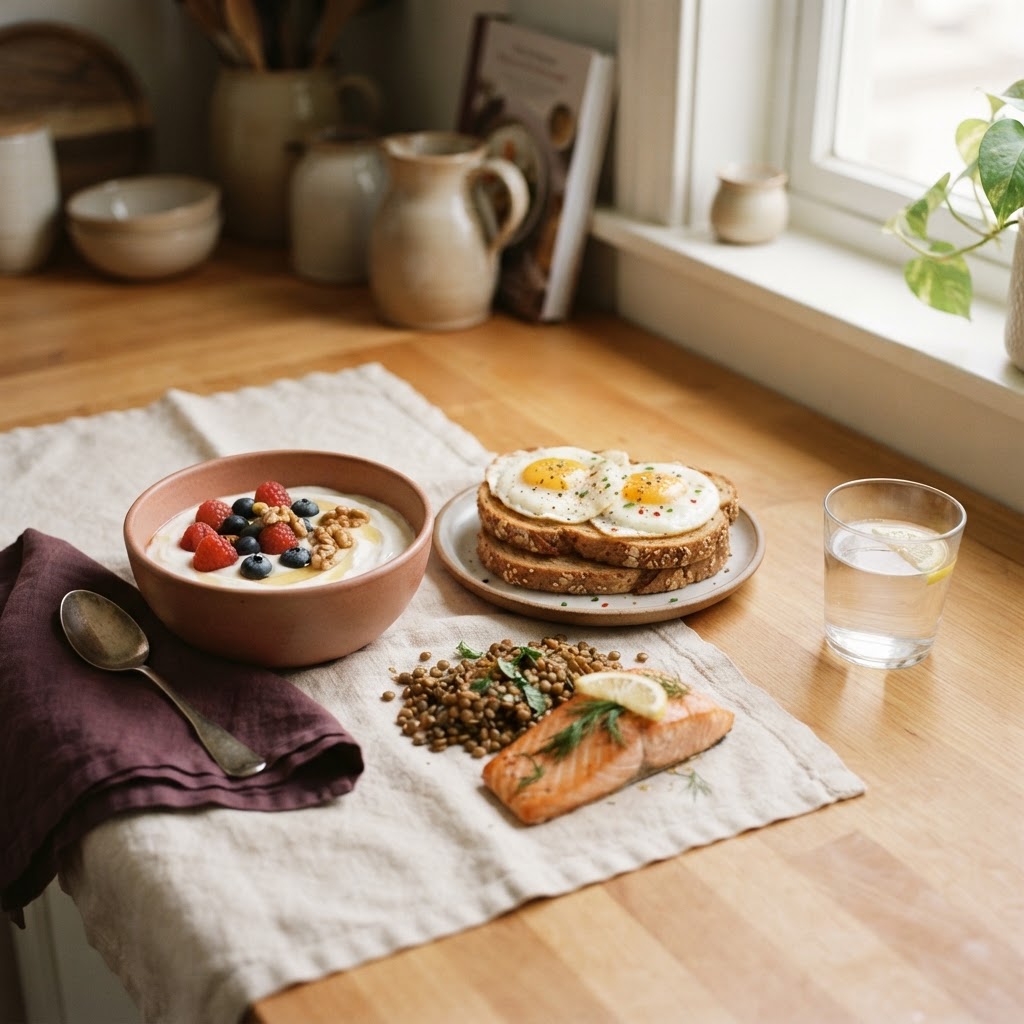
Fortunately, protein comes in more interesting forms than plain chicken breasts and chalky shakes. Some easy options include Greek yogurt with berries, eggs with whole-grain toast, cottage cheese, salmon, lentil soup, tofu, and beans.
One practical approach is to include a meaningful protein source at each meal instead of trying to squeeze your entire daily intake into dinner. If you are frequently eating on the run, these protein shakers are a convenient option for mixing protein drinks. And if meal preparation is your biggest obstacle, glass meal-prep containers can make planning lunches easier.
What about protein powder?
Protein powders can be useful when you are busy or struggling to meet your needs through regular food. Whey, soy, and certain plant-based protein blends can all contribute to your daily intake. Look at protein content per serving, ingredients, added sugar, and independent quality testing. You do not need the most expensive product, and you certainly do not need to replace every meal with a shake.
Don't forget the weights
Protein is only part of the equation. Resistance training helps your body maintain and build muscle. You do not need an elaborate home gym. A simple set of Fit Simplify resistance bands can provide an accessible starting point for basic strengthening exercises. Start with movements appropriate for your fitness level and progress gradually.
The goal is not necessarily bigger muscles or a different dress size. It is being able to lift your suitcase, carry groceries, get up off the floor, and continue doing the things you enjoy.
The bottom line
Prioritizing protein in midlife is not about following another diet trend. It is about giving your body the materials it needs to stay strong. Start with the food you are already eating. Add protein where it makes sense, incorporate strength-building movement, and skip the pressure to do everything perfectly. One more thing for the list, yes. But at least this one comes with benefits worth paying attention to.
References
- Bauer et al. (2013), Evidence-Based Recommendations for Optimal Dietary Protein Intake in Older People
- National Institutes of Health: Protein and Healthy Aging
- Dietary Guidelines for Americans
This article is for general information only and does not provide medical advice.

Read next · Gifting & Shopping
12 Thoughtful Gifts for the Woman in Perimenopause: Because She Deserves a Little Extra Comfort
More from this topic
12 Thoughtful Gifts for the Woman in Perimenopause: Because She Deserves a Little Extra Comfort
Comfort, cooling, and a little well-deserved pampering: twelve gifts that make the perimenopause years feel a whole lot kinder.

Brain Fog in Midlife: Why Did I Walk Into This Room Again?
When your brain has approximately 37 tabs open and you cannot find the one playing music. What is behind midlife brain fog, and what actually helps.

Why Is My Skin Suddenly So Dry? Welcome to Midlife Skincare
When your favorite moisturizer starts acting like it has a part-time job. What declining estrogen does to your skin barrier, and the simple routine that actually helps.